It's Not Easy Being Green - Why Are So Many Birds Predominantly Green?

It’s generally agreed that there are roughly 400 species of parrots in the world. While parrots are known for representing just about all the colours in the rainbow, there’s no secret that the majority of species are at least partially green in colour.
So why is green such a present colour in the Psittacine world? What makes parrots green?
The main reason is simply camouflage.

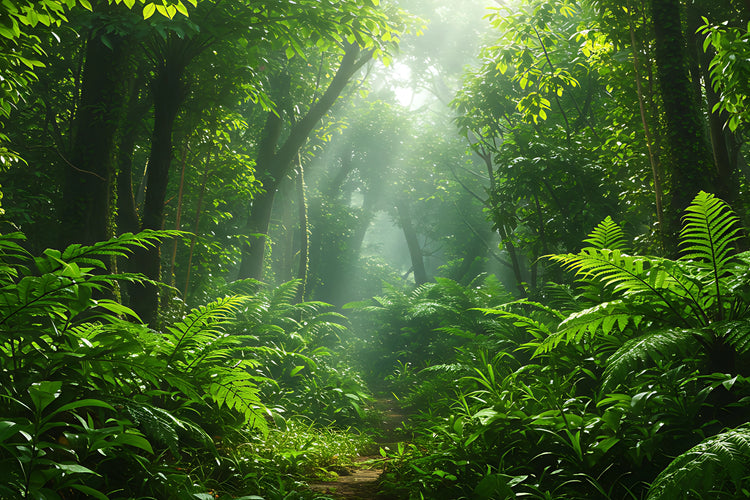
Most parrots come from the tropical and subtropical regions of the world. Foliage is lush in these regions, and being leaf-coloured means you have a better chance at evading the keen senses of potential predators. Even in more arid and scrubland regions, there are grasses, cacti, etc. which are green in colour. Whether they’re flying to-and-from the nest, foraging for food, or seeking out a mate, being able to quickly disappear into your surroundings is important for parrots in nature.
Where Does All This Green Come From?
Unlike plants, birds don’t possess chlorophyll - the green pigment that gives most plants their hue. In parrots, the most common cause of green feathers is actually two factors and a bit of light-magic!
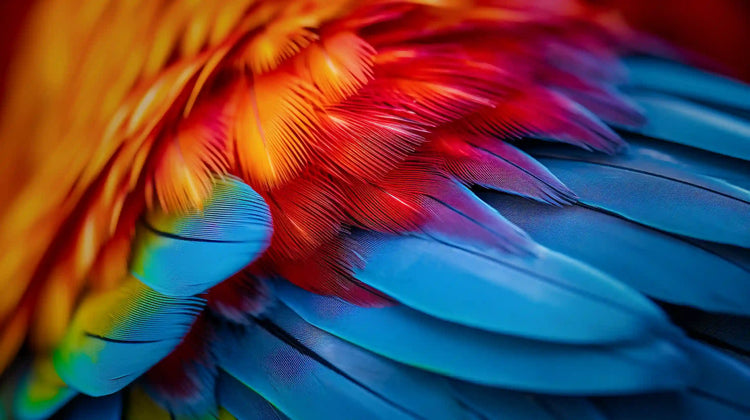
Most feathers have a base colour they receive from self-synthesized pigments called ‘Psittacofulvins’, or ‘Psittacins’ for short - most commonly yellow or red.
Feathers also have a structural component to each barb. This structure reflects certain blue wavelengths of light off the feather and back toward the human eye. If we take a brief stroll back to elementary school, we will remember that when we mix yellow and blue we get — GREEN!
The combination of yellow Psittacins in the feather, and a blue-light reflecting structure creates the illusion of green to our vision.
Special Eyes
It is also important to understand that birds can see a larger range of colour than humans can. Where we see green feathers, birds often see different colours and even patterns! This is thanks to their tetrachromatic vision giving them the ability to see the UV colour range.

Their unique vision helps in finding food, selecting mates, and recognizing one species from another. As more and more research is done on this topic, we will be able to better understand just what our wonderful feathered friends see that we don’t.
In Short
Green is one of the most common colours in the natural world. This colour serves many different purposes to many different organisms, and comes in many forms. The unique self-synthesized pigments in combination with a very specific feather structure are truly something special.
A reminder that we’re about as lucky to share our lives with our feathered friends as a four-leafed clover!